
How to Prep Walls After Wallpaper Removal
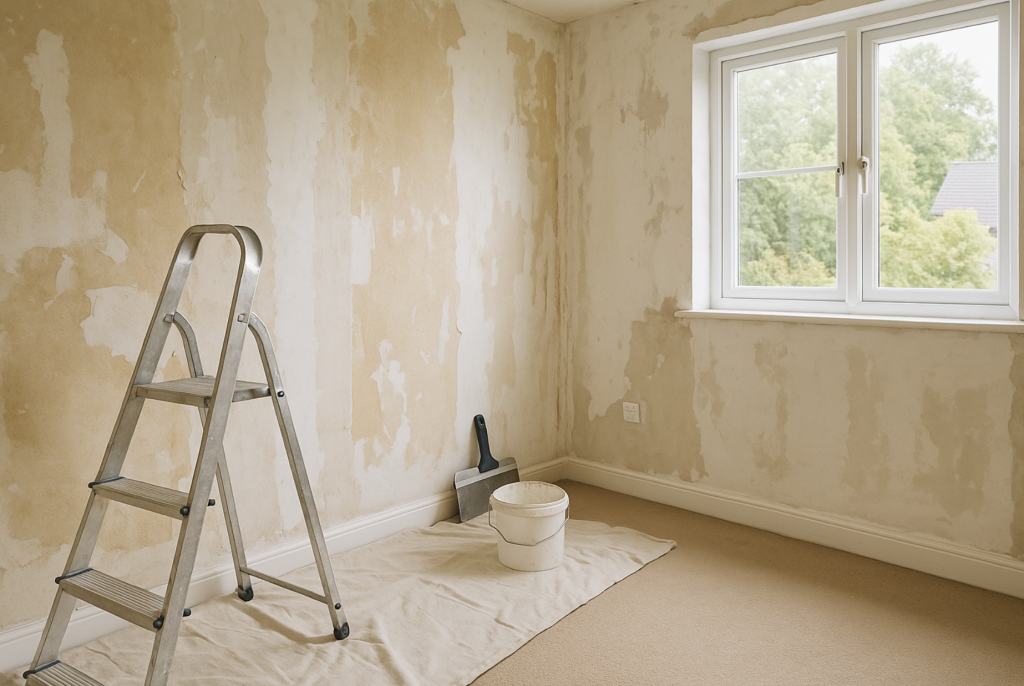
Wall painting requires proper preparation, especially in older homes where wallpaper removal often leaves behind chipped paint and uneven surfaces. Without the right steps, even the best paint job will look patchy. Preparing the walls correctly makes all the difference in achieving a smooth, professional wall painting finish.
Wall Painting Starts with Removing Old Layers
The first stage of wall painting prep is removing loose paint and wallpaper glue. Scraping is essential, and if adhesive is stubborn, a wallpaper steamer or remover solution can help. Being careful at this stage protects the plaster underneath and creates a clean foundation for wall painting.
Clean walls ensure that fresh paint bonds well and the wall painting finish lasts longer.
Evening Out the Walls Before Painting
Once old layers are gone, the next step in wall painting preparation is smoothing the surface. Skim coating offers the most flawless results, while lining paper is a practical option for minor imperfections. Small chips and cracks can be repaired with filler or joint compound.
The chosen method of evening out the walls determines how seamless your wall painting results will look.
Filling and Sanding for a Smooth Wall Painting Base
Wall painting highlights every bump and crack, so filler and sanding are vital. Defects should be repaired with compound and sanded flat, even if the process needs repeating. Touching the wall should feel smooth before painting begins.
Proper filling and sanding prevent imperfections from showing through your wall painting finish.
Priming the Walls for Painting Success
Priming is essential before wall painting. Stabilizing primers seal porous areas and lock down any leftover wallpaper paste, while problem-wall primers hide patchiness. Skipping primer can cause uneven texture and ruin the paint job.
Primer creates the perfect base for wall painting and ensures even coverage.
Final Steps Before Wall Painting
Before the first brush stroke, check the walls again, cover floors and trim, and tape off edges. Once everything is protected, wall painting can begin with confidence.
Careful final preparation makes the actual wall painting process easier and guarantees a professional result.
Wall painting in older homes requires patience and proper preparation. Cleaning, smoothing, priming, and protecting surfaces might feel time-consuming, but these steps ensure that the finished paintwork looks seamless and lasts for years.
Read
Exact Painting Process From Start to Finish
Exterior Painting Before Listing a House – Worth It or Waste of Money?