
Interior vs. Exterior Painting: What’s the Difference and Why It Matters
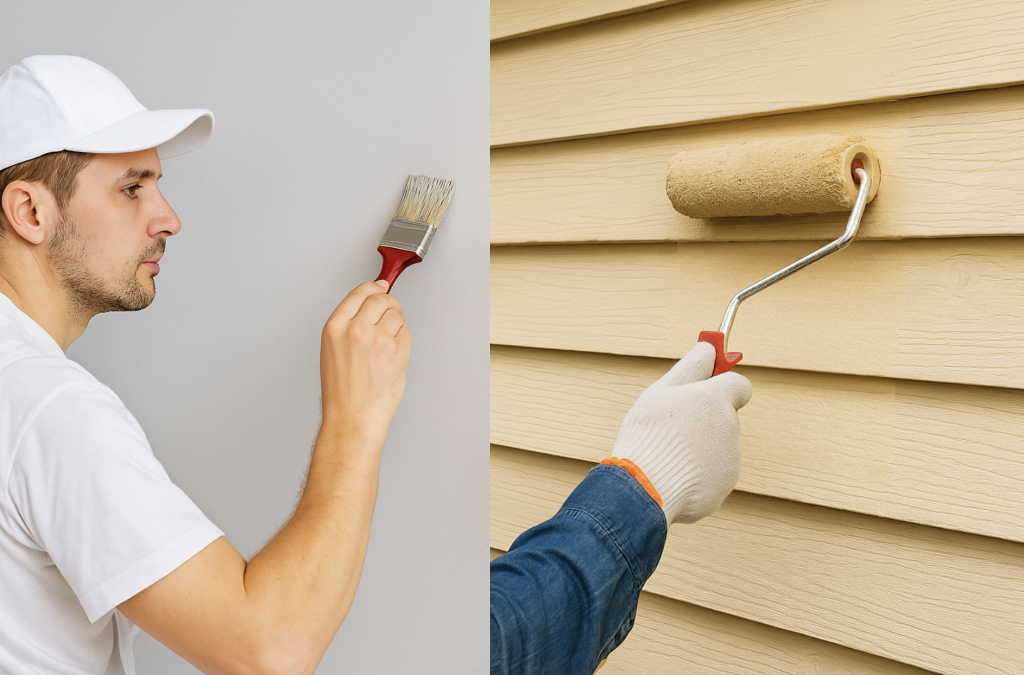
Painting is one of the most effective ways to refresh and protect your home. However, interior and exterior painting are not the same — each comes with its own techniques, materials, and challenges. Understanding the key differences helps homeowners make informed decisions about when to take on the project themselves and when to hire professionals.
1. Environmental Conditions
The biggest distinction between interior and exterior painting is exposure to the elements.
- Interior painting happens in a controlled environment. There are no concerns about rain, wind, or fluctuating temperatures.
- Exterior painting requires planning around weather, daylight hours, and humidity. Surfaces exposed to sun and moisture need paints designed to withstand fading, cracking, and peeling.
2. Paint Formulation
The paint itself differs significantly.
- Interior paints are formulated for aesthetics, easy application, and washability. They emphasize low odor, smooth finishes, and resistance to scuffs or stains.
- Exterior paints include additives for durability — UV protection, water resistance, and flexibility to expand and contract with temperature changes. Using the wrong type of paint in the wrong place leads to premature failure.
3. Surface Preparation
Preparation plays a key role in how long the paint will last.
- Inside the home, prep work may involve patching holes, sanding, or priming drywall.
- On the outside, prep is more extensive. It can include scraping old paint, pressure washing, repairing damaged siding, and priming exposed surfaces. Without thorough prep, even the best paint won’t adhere properly outdoors.
4. Tools and Application
Different tools are often used depending on the project.
- Interior painting typically involves brushes and rollers for precision and smooth coverage.
- Exterior painting may require sprayers for large areas, scaffolding or ladders for height, and protective gear for working outdoors. The process is more labor-intensive and physically demanding.
5. Health and Safety Considerations
Safety varies between the two.
- Indoors, ventilation is critical to manage fumes, even with low-VOC paints. Drop cloths and tape protect furniture and flooring.
- Outdoors, the risks involve working at heights, using ladders, and handling heavier equipment. Proper protective gear is essential.
6. Cost and Time Investment
- Interior projects are usually faster and less expensive, depending on room size and detail work.
- Exterior projects often take longer due to prep, weather delays, and the scale of surfaces. Paint itself is a large portion of the cost, but labor is also significant because of the time involved.
Why It Matters
Understanding the differences between interior and exterior painting helps you plan projects more effectively. Interior painting is generally more manageable for homeowners who want a DIY approach, while exterior painting requires more preparation, skill, and endurance to achieve lasting results.
Interior painting is about design and finish, while exterior painting is about protection and longevity. Knowing when to handle a project yourself — and when to hire it out — ensures that your investment in paint truly pays off.