
What Is the Best Way to Paint Interior Doors?
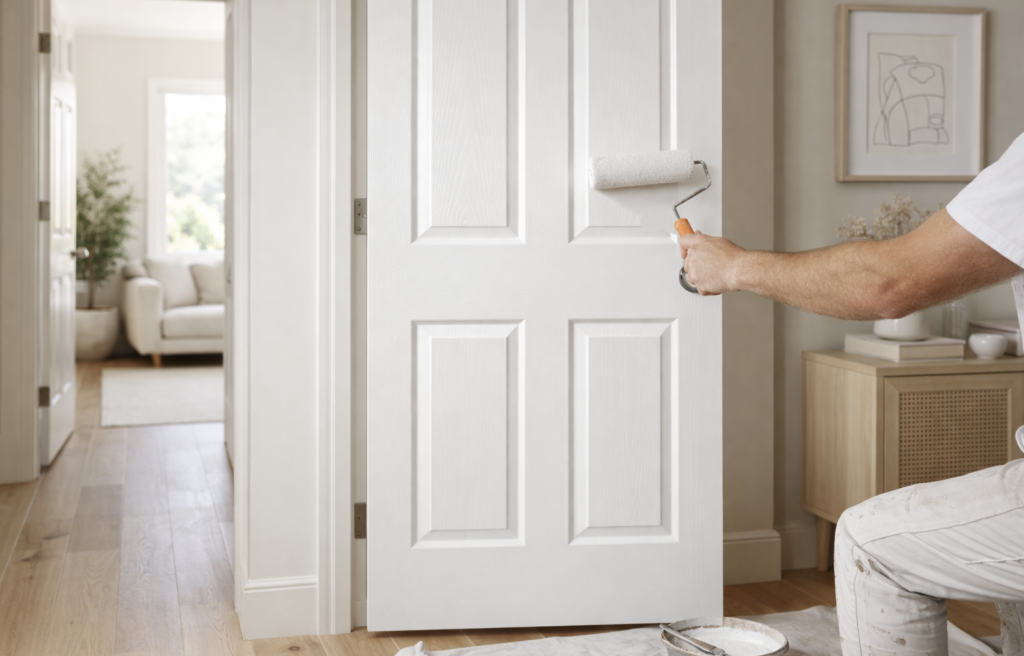
Painting doors is one of the most detail-sensitive interior painting tasks. Even small mistakes in preparation, paint choice, or application method can result in visible texture, uneven sheen, or sticking doors. The best method depends on the desired finish quality, available tools, and level of control during application.
Step 1: Proper Door Preparation
Preparation has a larger impact on results than paint brand alone.
Recommended preparation steps:
- Remove the door from the hinges whenever possible
- Remove all hardware (handles, hinges, latches)
- Lightly scuff the surface with fine sandpaper or a sanding sponge
- Clean thoroughly to remove dust, oils, or manufacturing residues
(new primed doors often contain silicone or release agents) - Allow the surface to fully dry before painting
For new, factory-primed doors, scuffing and cleaning are still essential to ensure adhesion and even sheen.
Step 2: Choose the Right Paint Type
Doors require paints specifically designed for trim and woodwork. These paints level better, dry harder, and reduce sticking (blocking).
Key paint characteristics to look for:
- Designed for doors and trim
- Good self-leveling properties
- Durable cured finish
- Longer open time for smoother results
Popular options fall into two categories:
- Hybrid water-based enamels (easier cleanup, good leveling)
- Urethane-reinforced trim paints (harder finish, better durability)
Sheen selection matters: satin and semi-gloss are most common, but uneven application will be more visible as sheen increases.
Step 3: Best Application Methods Compared
1. Spraying (Best Finish Quality)
- Produces the smoothest, factory-like finish
- Ideal when doors are removed and laid flat
- Requires proper sprayer setup, fine-finish tip, and thorough cleaning
- Multiple light coats are recommended
Best for: High-end results and full door projects
2. Roller + Brush (Most Practical Method)
When spraying is not an option, rolling and brushing can still produce excellent results.
Recommended tools:
- 3/16″–3/8″ microfiber or foam roller
- High-quality soft bristle sash brush (2.5″–3″)
- Use a small roller (“whizzy” / mini-roller) for panels
Technique tips:
- Apply enough paint to allow leveling — avoid dry rolling
- Roll evenly, then “lay off” in one direction (top to bottom)
- For panel doors, complete each section fully before moving on
- Brush only to smooth, not to redistribute paint
- Avoid stopping mid-section to prevent lap marks
This method can closely mimic a sprayed finish when done correctly.
3. Foam Roller (Acceptable DIY Option)
- Easy to control
- Leaves some texture compared to microfiber
- Suitable for interior doors where perfection is not critical
Best results come from multiple thin coats and patience between layers.
Step 4: Paint Order and Workflow
To prevent runs and uneven drying:
- Paint panels first
- Paint rails (horizontal sections)
- Paint stiles (vertical sections)
- Finish with a full, continuous lay-off stroke
If painting flat:
- Paint one face and all edges
- Allow sufficient set time
- Flip carefully and repeat on the opposite side
Painting all six sides helps seal the door and improve long-term durability.
Step 5: Drying, Recoat, and Cure Time
Door paints often dry slowly but cure hard.
Important considerations:
- Follow manufacturer recoat times strictly
- Avoid reinstalling doors too early
- Full cure can take several days to weeks
- Premature handling can cause sticking or surface damage
Rushing rehanging is one of the most common causes of finish failure.
Common Mistakes to Avoid
- Skipping surface cleaning on new doors
- Using wall paint instead of trim paint
- Applying paint too thin to “avoid texture”
- Overworking paint during drying
- Ignoring sheen consistency
- Reinstalling doors before full cure
Final Recommendation
For the best results:
- Remove doors if possible
- Use a high-quality trim or door paint
- Spray for maximum smoothness, or roll and lay off carefully
- Focus on preparation and technique over brand alone
- Allow sufficient drying and curing time
A well-painted door should not draw attention to itself — the best finish is one that quietly blends into the space without visible texture, runs, or uneven sheen.
Read
Easiest Way to Paint Baseboards (Step-by-Step Guide)
Interior Wall Paint and Texture: How Texture Affects a Modern Interior