
Easiest Way to Paint Baseboards (Step-by-Step Guide)
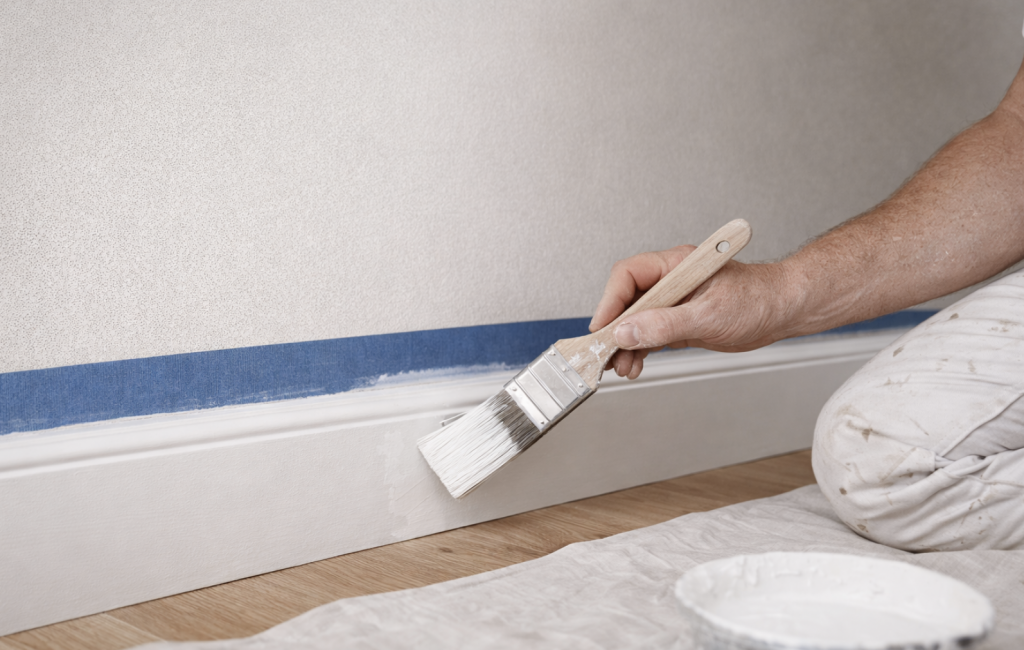
Painting baseboards is one of the simplest ways to refresh a room, but it often causes hesitation due to tight edges, flooring protection, and surface preparation. The good news: baseboards can be painted cleanly and efficiently with the right order of work, tools, and technique — even when they have a wood-look finish or composite surface.
This guide explains the easiest and most reliable approach.
Step 1: Identify the Baseboard Material
Before painting, determine what the trim is made of:
- Painted wood or MDF – easiest to repaint
- Finished wood (stained or sealed) – requires scuffing and primer
- Composite / laminate-look trim – needs special prep for adhesion
If the trim has a factory finish or wood appearance, paint will not adhere properly without preparation.
Step 2: Proper Surface Preparation (Critical)
Skipping prep is the most common cause of peeling and chipping.
Required prep steps:
- Clean thoroughly to remove dust, oils, and residue
- Lightly scuff the surface with fine sandpaper (180–220 grit)
- Wipe clean after sanding
Primer matters
For finished wood or composite trim:
- Use a bonding primer or shellac-based primer
- One coat is usually sufficient
- Allow full drying time before painting
Unfinished or previously painted trim can still benefit from primer for durability and uniform color.
Step 3: Masking the Floor (Yes, Do It)
Even experienced painters protect the floor.
Recommended options:
- Painter’s tape along the floor edge
- Cardboard runners or masking shields
- Drop cloths for carpet or tile
Masking the floor allows you to focus on one clean line instead of two, saving time and reducing mistakes.
Step 4: Paint Order (Best Results)
If painting multiple surfaces:
- Ceilings
- Walls
- Baseboards (last)
Painting baseboards last ensures:
- Cleaner lines
- No wall drips ruining finished trim
- Better visual contrast control
If walls and trim are the same color, baseboards should still be painted last for precision.
Step 5: Tools That Make It Easy
The right tools reduce effort significantly.
Recommended:
- 2–3 inch angled sash brush
- High-quality synthetic bristles (for latex paint)
- Optional: small foam or microfiber roller for wide trim
Avoid small or cheap brushes — they cause streaks and uneven coverage.
Step 6: Painting Technique
Brush technique
- Load brush moderately (not dripping)
- Use long, smooth strokes
- Press lightly to spread bristles near edges
- Avoid short, choppy movements
For wider trim
- Roll paint on first
- Lightly back-brush to smooth finish
- Saves time and improves consistency
Step 7: Tape Strategy (Optional but Helpful)
Taping is not mandatory but recommended if:
- You want perfectly straight lines
- You’re painting near textured walls
- You prefer a slower but safer approach
Pro tip:
After taping, lightly brush a small amount of trim paint along the tape edge to seal it before painting the wall. This reduces bleed-through.
Remove tape before paint fully cures to avoid peeling.
Step 8: Paint Type and Finish
Best choices for baseboards:
- Semi-gloss or satin finish
- Durable, washable, and scuff-resistant
Latex trim paint is common, but for composite or plastic-like trim, specialty coatings or spray paints designed for plastic may perform better.
Avoid heavy coats — multiple thin coats look cleaner and last longer.
Common Mistakes to Avoid
- Painting without sanding finished trim
- Skipping primer on sealed or composite surfaces
- Using low-quality brushes
- Applying thick coats to save time
- Painting trim before walls
The easiest way to paint baseboards is not about speed — it’s about preparation, order, and control. With proper surface prep, floor protection, a good brush, and the right paint, baseboards can be painted cleanly with professional-looking results and minimal frustration.
Done correctly, this is a one-time upgrade that holds up for years.
Read
Easiest Way to Paint Baseboards (Step-by-Step Guide)
What Is the Best Way to Paint Interior Doors?