
Choosing the Right White Paint When Your Original Color Is Gone
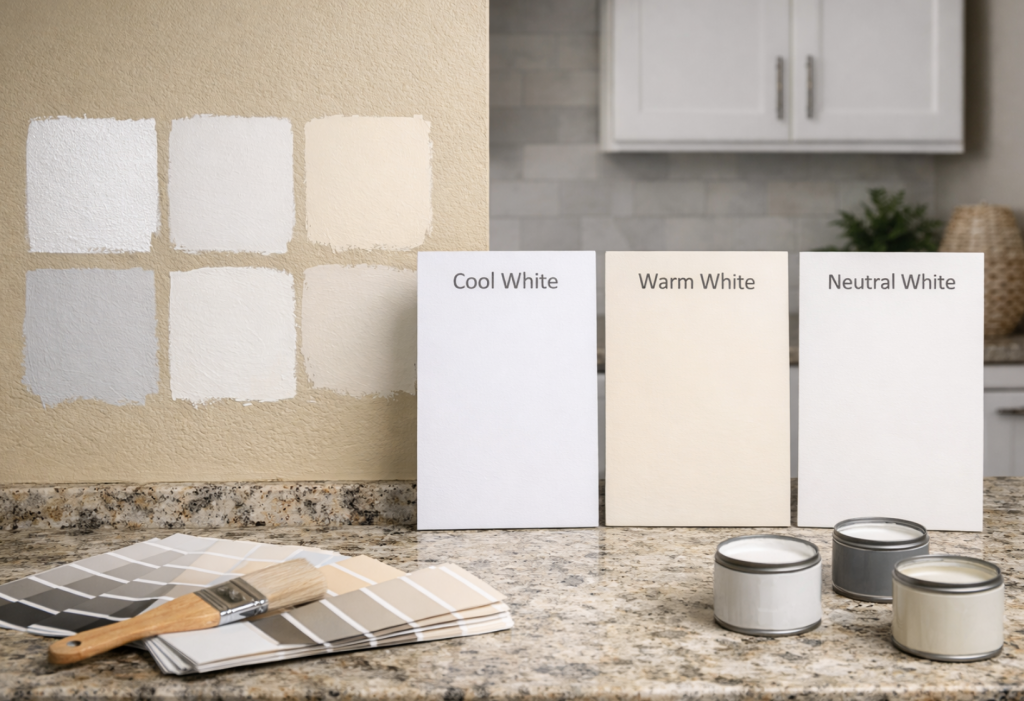
When an existing interior paint color is discontinued, homeowners often see it as a forced inconvenience. In practice, it’s also an opportunity — especially if the old shade carried unwanted yellow or beige undertones. Based on a large discussion around this exact situation, several clear principles emerge for choosing a new white or off-white that actually improves the space rather than creating new problems.
1. White Is the Default — but Not All Whites Are Equal
The dominant conclusion is straightforward: white or off-white is the safest and most flexible direction. However, “white” covers a wide spectrum. Subtle shifts in undertone — yellow, gray, taupe, green — can dramatically change how a room feels once the walls are fully painted.
Key takeaway: avoid assuming that a recommended white will look the same in every home. Light direction, flooring, and fixed finishes matter more than brand popularity.
2. Be Careful With Yellow and Gray Undertones
Many comments converge on the same warning:
- Too much yellow can read as dated or “buttery,” especially next to modern finishes.
- Too much gray can feel cold, flat, or sterile — particularly with warm wood floors.
The most consistently recommended options sit in the middle: creamy, soft whites with restrained warmth and no obvious gray cast.
3. Lighting Direction Changes Everything
A recurring technical point is how strongly natural light direction affects white paint:
- North-facing rooms tend to push whites cooler or slightly green.
- South-facing rooms amplify warmth and creaminess.
- Artificial lighting can exaggerate undertones even further.
Because of this, a white that works beautifully in one room may look wrong in another — even within the same house.
4. How to Test Paint Correctly
One of the most practical recommendations is also one of the most overlooked:
- Do not test samples directly on the existing wall color.
- Paint samples on white foam boards or poster boards instead.
- Move them around the room and compare them against permanent elements (floors, cabinets, tile, trim).
This isolates the true undertone and prevents the old wall color from visually contaminating the test.
5. Choose Paint After (or With) the Decor
Another strong consensus: paint should support the room, not dictate it.
- Flooring, tile, cabinetry, furniture, and textiles should guide the undertone choice.
- It’s far easier to adjust paint than to replace a sofa or flooring that clashes later.
In short: paint is a finishing decision, not a starting point.
6. Popularity Isn’t the Same as Suitability
Many well-known whites are frequently recommended, but that doesn’t make them universal solutions. The thread repeatedly reinforces one idea:
A white that looks perfect in photos or someone else’s home can look completely wrong in yours.
Photographs flatten color variation. Final judgment must happen in the actual space.
Final Guidance
If you’re replacing a discontinued interior paint and want to brighten the space:
- Stay in the soft white / warm off-white range
- Avoid strong yellow or heavy gray undertones
- Test samples properly, away from the existing wall color
- Evaluate paint alongside fixed finishes and real lighting
- Accept that several options may look “the same” — and that’s okay
At a distance, most whites converge visually. The goal isn’t perfection under a microscope — it’s a balanced, comfortable result once the room is finished and lived in.
Read
Interior Painting Mistakes That Cost Homeowners Time and Money
Choosing Wall Colors for a Vintage Living Room With Bold Furnishings