
Choosing Wall Colors for a Vintage Living Room With Bold Furnishings
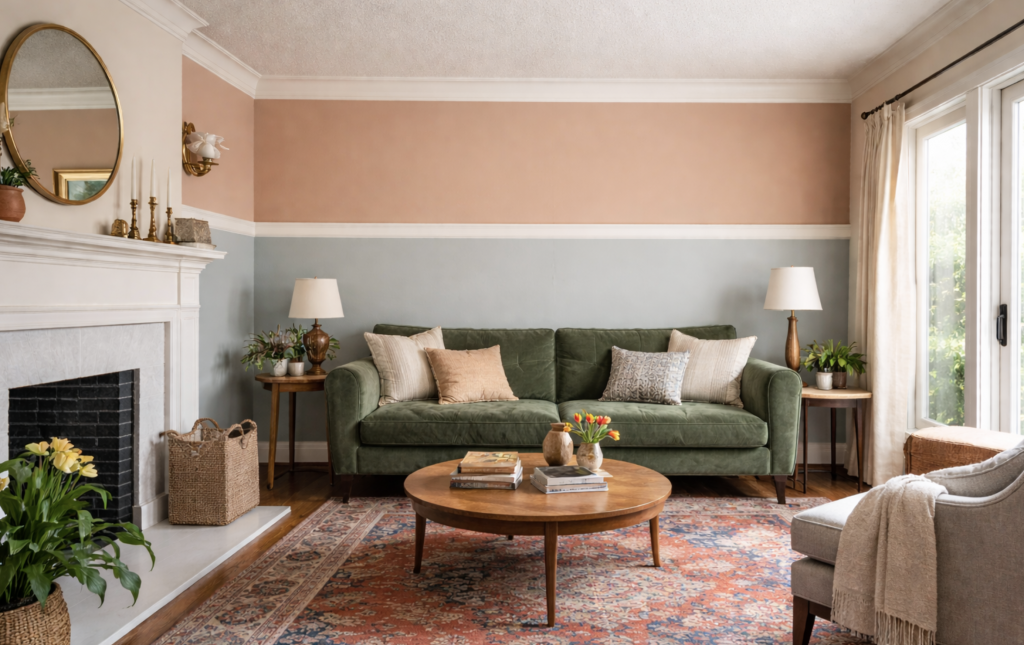
Selecting a paint color for a character-filled home can be more complex than following current trends. This is especially true for older houses, where architectural details, ceiling height, and original layouts influence how color behaves in a space. When a living room already includes strong visual elements — such as a patterned rug, a saturated sofa color, or vintage details — paint choices must balance cohesion and restraint.
Start With What Stays in the Room
Effective color planning begins by identifying fixed elements. Upholstered furniture, large rugs, fireplaces, and built-in features usually dictate the palette. When a room includes a boldly colored sofa and a multicolored rug, wall colors should support these elements rather than compete with them.
Pulling secondary or muted tones from existing textiles often produces the most cohesive result. Softer versions of colors already present — such as dusty pinks, muted terracotta, pale blues, or warm olive tones — allow the room to feel intentional without overwhelming it.
Warm Neutrals as a Foundation
Warm neutrals remain one of the safest and most versatile choices for spaces with layered color. Off-whites, warm beiges, and soft greige tones provide a backdrop that highlights furniture and decor while preserving brightness.
Unlike cool whites or stark grays, warmer neutrals complement vintage architecture and soften transitions between walls, trim, and ceilings. They also offer flexibility if decor evolves over time.
Two-Tone and Half-Wall Treatments: When They Work
Two-tone or half-height wall treatments can enhance older homes when applied selectively. Rather than wrapping the entire room, these techniques are often most effective on a single focal wall — such as the wall behind a sofa — where they add depth without visual clutter.
Key considerations include:
- Using a defined boundary such as a chair rail or subtle molding
- Keeping the upper color lighter to preserve openness
- Choosing colors with similar undertones to avoid harsh contrast
This approach respects architectural character while introducing visual interest in a controlled way.
Managing High-Contrast and Textured Surfaces
Rooms with textured ceilings, curved corners, or plaster walls require additional restraint. Strong contrast between wall and ceiling colors can exaggerate imperfections or make ceilings feel lower. In these cases, softer transitions — such as a cream ceiling paired with muted wall colors — maintain balance.
Semi-flush or low-profile light fixtures are also better suited to these spaces, reducing visual interruption and helping ceilings feel higher and cleaner.
Let the Rug Lead the Palette
When a room includes a standout rug, it often functions best as the primary color reference. Rugs with blues, reds, greens, and neutrals provide multiple viable paint directions. Choosing one dominant hue and muting it slightly for wall color ensures harmony while keeping the rug as a focal point.
This strategy avoids the common mistake of introducing unrelated paint colors that clash subtly but persistently with existing patterns.
Furniture Placement Matters as Much as Paint
Paint alone cannot resolve spatial imbalance. Furniture placement significantly affects how color is perceived. Allowing rugs to breathe, angling seating to reduce glare, and avoiding rigid alignment against walls can transform how paint reads across surfaces.
In many cases, adjusting layout before painting clarifies which walls deserve emphasis and which should remain neutral.
When Simplicity Wins
Despite the appeal of bold ideas like painted ceilings or full color-drenching, simpler solutions often serve historic homes best. A thoughtfully chosen wall color — applied consistently — can highlight architectural charm, showcase furnishings, and create a timeless result without over-designing the space.
Final Thought
Successful paint decisions in vintage living rooms are less about trends and more about restraint, balance, and respect for what already exists. By grounding choices in fixed elements, using softened tones, and applying decorative techniques selectively, homeowners can achieve a result that feels cohesive, intentional, and enduring.
Read
Choosing the Right White Paint When Your Original Color Is Gone
Interior Painting Mistakes That Cost Homeowners Time and Money