
Interior Painting a Whole House: Best Practices for Long-Lasting Results
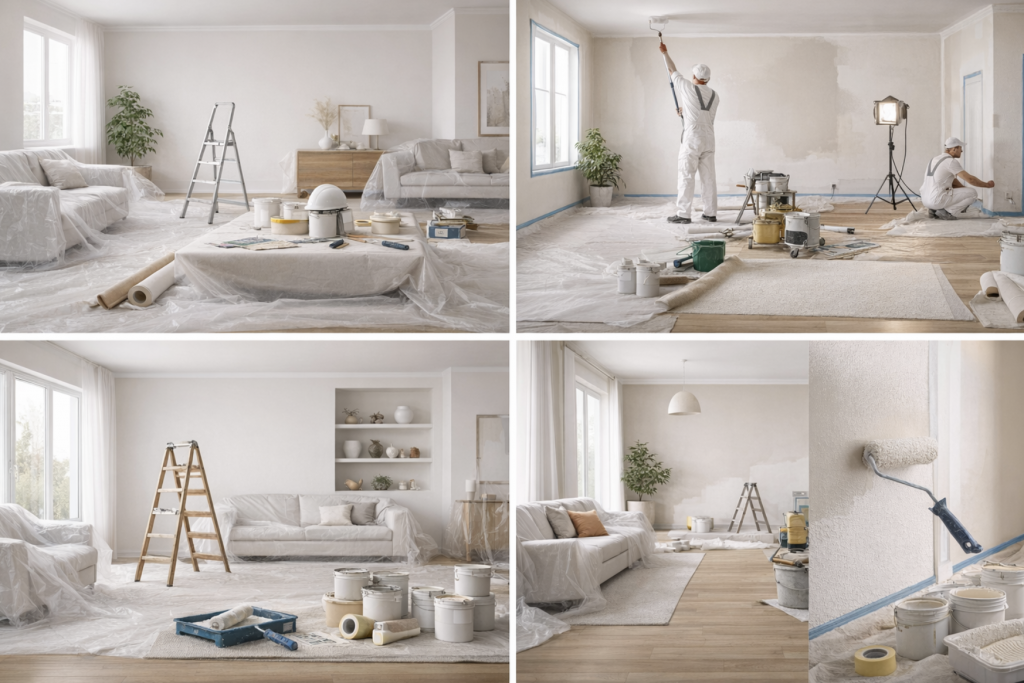
Interior painting is one of the most effective ways to refresh a home and improve the appearance of every room. Whether repainting walls, ceilings, or cabinets, a well-planned painting project can dramatically change the look of an interior space. However, painting an entire house requires more than simply applying a new coat of paint. Proper preparation, the correct order of work, and the right materials are essential to achieving a durable and professional result.
Start With Preparation Before Interior Painting
Before any paint is applied, preparation is the most important stage of the project. Walls, ceilings, and trim should be inspected carefully for imperfections such as nail holes, cracks, dents, or drywall damage. These flaws often become more visible after painting if they are not repaired first.
Typical preparation steps include:
- filling holes and repairing damaged drywall
- sanding uneven areas and rough patches
- cleaning surfaces from dust and grease
- masking areas that should not be painted
Proper preparation allows paint to adhere evenly and helps prevent visible defects in the finished surface. Many experienced painters consider preparation to be the most critical stage of interior painting.
Paint Before Installing New Floors
When renovating an entire home, the order of work can make the project easier and reduce the risk of damage. Interior painting is generally recommended before installing new flooring.
Painting first prevents accidental paint spills or roller marks on freshly installed floors. After flooring is installed, only small touch-ups may be required on the walls or trim.
Removing baseboards before painting and flooring installation can also simplify both processes and help achieve cleaner results.
Always Paint From the Top Down
A common rule in interior painting is to work from the highest surfaces downward. This means ceilings should always be painted before walls.
Ceiling paint often drips or splatters during application. By painting ceilings first, these small imperfections can be covered later when painting the walls. Working from top to bottom helps maintain clean surfaces and reduces the need for additional touch-ups.
Cabinets Should Be Painted Separately
Kitchen cabinets require a different approach than walls or ceilings. For the best finish, cabinet doors and drawers should be removed before painting.
Painting cabinets typically includes several stages:
- removing hardware and hinges
- labeling doors and drawers for reinstallation
- cleaning and sanding surfaces
- applying primer
- applying durable enamel paint
Separating cabinet components allows paint to be applied evenly and prevents visible brush marks around hinges or hardware.
Choosing the Right Interior Paint Finish
Different surfaces in a home benefit from different paint finishes. Selecting the appropriate finish improves durability and appearance.
Common interior paint finishes include:
Flat paint – often used for ceilings because it hides imperfections and reduces glare.
Eggshell or satin – popular for walls because it balances durability with a smooth appearance.
Semi-gloss – commonly used for trim, cabinets, and high-traffic areas because it is more resistant to moisture and easier to clean.
Choosing the right finish for each surface ensures that painted areas remain durable and easy to maintain.
Roller vs. Sprayer for Interior Painting
For most homeowners, rollers and brushes remain the most practical tools for interior painting. Rollers provide even coverage on large wall surfaces, while brushes are useful for corners, trim, and detail work.
Although paint sprayers can apply paint quickly, they often require significant preparation to prevent overspray. Without careful masking, sprayers can create paint mist that settles on nearby surfaces. For this reason, rollers are often the preferred method for interior painting projects.
Remove Fixtures and Wall Covers
Before painting, outlet covers, switch plates, and small fixtures should be removed. This allows paint to be applied cleanly around electrical outlets and wall switches without leaving visible edges.
Light fixtures can also be lowered slightly to allow access to the ceiling surface behind them. Removing these small elements improves the final appearance and prevents uneven paint lines.
Use Quality Tools and Materials
High-quality brushes, rollers, and paint products play an important role in the outcome of an interior painting project. Better tools help apply paint evenly and reduce streaks or roller marks.
Investing in quality materials often saves time during painting and improves the durability of the finished surface.
Planning a Full Interior Painting Project
Painting an entire home requires careful planning. Even smaller houses involve multiple rooms, ceilings, trim pieces, and cabinets that must be completed in the correct order.
Key factors to consider include:
- preparation time for repairs and sanding
- drying time between coats
- proper sequencing of ceilings, trim, and walls
- selecting consistent colors throughout the house
By planning the project carefully and following a structured process, interior painting can transform a home while producing long-lasting results.
Read
Interior Painting Color Trends: What Homeowners Are Choosing Today