
Best Carpet Options for Stairs in High-Traffic Homes
Why Stairs Require Specialized Carpet
Stairs experience a different type of нагрузка compared to flat flooring. Each step concentrates weight on a smaller surface area, especially along the front edge (nose), where most pressure and wear occur. This constant impact leads to faster fiber breakdown, visible flattening, and loss of appearance if the wrong carpet is used.
In high-traffic homes, where stairs are used dozens of times a day, standard residential carpet simply does not hold up. It wears unevenly, becomes slippery, and may even loosen over time. That’s why stairs require a more durable, tightly constructed carpet designed to handle repeated stress while maintaining grip and structure.
Key Features to Look for
Choosing the right carpet for stairs starts with understanding the characteristics that directly affect performance:
- durability: the carpet must withstand constant foot traffic without flattening quickly
- low pile height: shorter fibers provide better stability and reduce movement underfoot
- high density: tightly packed fibers resist wear and maintain shape longer
- strong backing: ensures the carpet stays secure on stair edges
- stain resistance: important for maintaining appearance in busy households
These features work together to ensure the carpet remains safe, functional, and visually consistent over time. Ignoring any of them often leads to premature replacement.
Best Carpet Materials for Stairs
Material choice plays a major role in how well carpet performs on stairs:
- nylon: the most durable and resilient option, ideal for high-traffic areas
- polyester: more budget-friendly, stain-resistant, but less durable than nylon
- wool: natural and comfortable, offers good resilience but requires more maintenance
For most homes with heavy use, nylon stands out as the best balance between longevity, safety, and ease of care. Polyester can work in lower-traffic situations, while wool is typically chosen for aesthetics and comfort rather than maximum durability.
Carpet Styles Suitable for High Traffic
Not all carpet styles are suitable for stairs. The structure of the fibers directly affects wear resistance and safety:
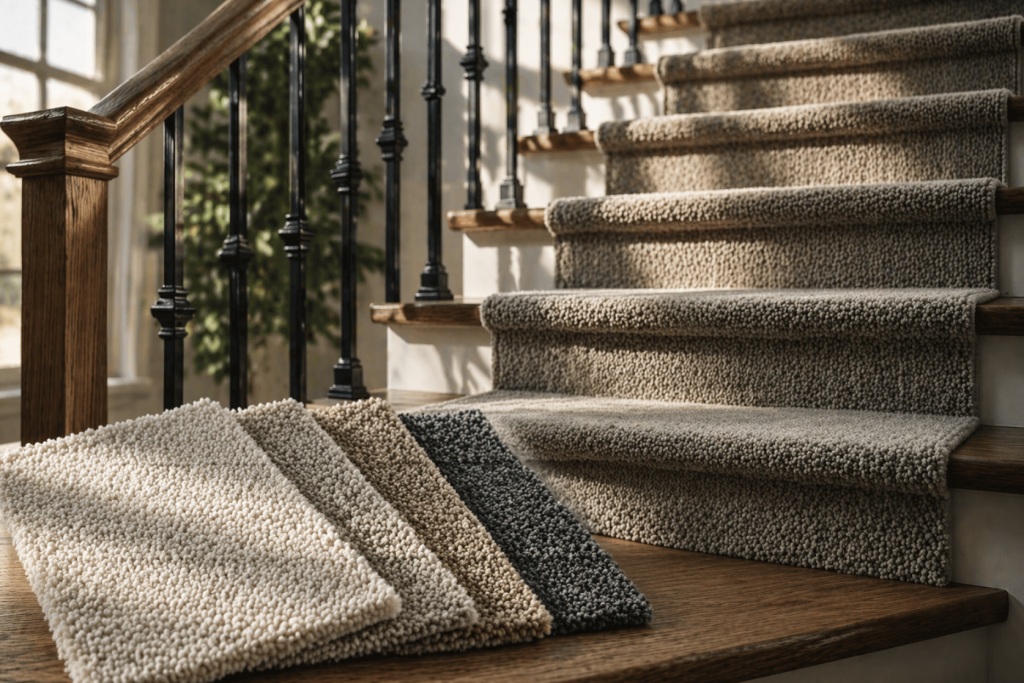
- loop pile (berber): highly durable, maintains structure well, resists crushing
- low cut pile: softer appearance but should be dense and tightly woven
- patterned carpets: help hide wear and footprints over time
Loop pile carpets are often the preferred choice for high-traffic stairs due to their ability to retain shape. However, the loops must be small and tightly constructed to avoid snagging.
Carpet Thickness and Padding
Thickness plays a critical role in both safety and performance. While thicker carpet may seem more comfortable, it can actually reduce stability on stairs.
Low to medium thickness is optimal, as it keeps the foot stable and prevents excessive movement. Thick, plush carpets can create a soft, unstable surface, increasing the risk of slipping.
Padding is equally important. A firm, high-density underlay provides cushioning without compromising support. It also helps extend the life of the carpet by absorbing impact from each step. The key is balance — enough softness for comfort, but enough firmness for control.
Safety Considerations
Safety should always be the priority when selecting carpet for stairs. Several factors directly influence how safe the final result will be:
- slip resistance: low-pile, dense carpets provide better traction
- proper installation: loose or poorly fitted carpet can create hazards
- secure edges: stair noses must be tightly wrapped and fixed
- consistent surface: uneven thickness can affect balance
When all these elements are properly addressed, carpeted stairs become significantly safer than hard surfaces. In high-traffic homes, this combination of grip, durability, and stability makes the right carpet choice not just a design decision, but a practical investment in everyday safety.
Read
Why Install Carpet on Stairs: Safety, Grip, and Noise Reduction
LVP vs Laminate Flooring: Key Differences Explained