
Waterproof Flooring Options: Why Homeowners Choose LVP
What Makes Flooring Waterproof
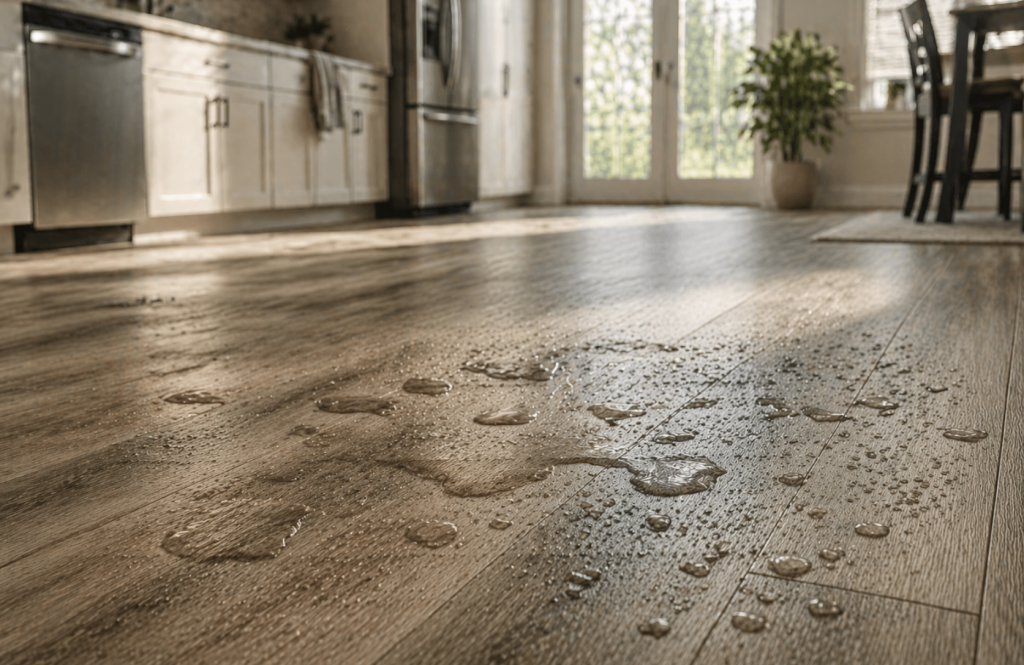
Not all flooring labeled as “water-resistant” can handle real exposure to moisture. Truly waterproof flooring is designed with a core that does not absorb water, preventing swelling, warping, or structural damage.
The key factor is material composition. Floors with synthetic or sealed cores block moisture from penetrating beneath the surface. In contrast, materials with wood-based cores can absorb water over time, even if their top layer resists spills. Waterproof flooring maintains its integrity even when exposed to standing water, making it suitable for demanding environments.
Types of Waterproof Flooring
Homeowners today have several waterproof flooring options to choose from:
- luxury vinyl plank (LVP): fully waterproof, durable, and visually similar to wood
- ceramic or porcelain tile: naturally waterproof and highly durable
- stone flooring: resistant to water when properly sealed
- waterproof laminate (limited): improved resistance but not fully waterproof in most cases
Each option has its strengths, but they differ in comfort, installation complexity, and cost. The choice depends on how the space is used and the level of exposure to moisture.
Why LVP Leads the Market
LVP has become one of the most popular waterproof flooring solutions due to its balance of performance and practicality. Its core is designed to resist water completely, while the wear layer protects against daily damage.
Unlike tile or stone, LVP offers a softer and more forgiving surface. At the same time, it provides the visual appeal of natural wood without the maintenance challenges. This combination makes it suitable for a wide range of residential applications.
Another reason for its popularity is versatility. LVP can be installed in almost any room, allowing homeowners to maintain a consistent look throughout the entire home.
Performance in Real Conditions
In everyday use, flooring is exposed to more than just occasional spills. Kitchens, bathrooms, and entryways deal with constant moisture, dirt, and temperature changes.
LVP performs reliably in these conditions. It does not swell or shift when exposed to water, and it maintains its shape even in humid environments. In cases of accidental spills or minor leaks, the surface can simply be cleaned without long-term consequences.
This reliability makes LVP a practical choice for households that need flooring capable of handling real-life situations without constant concern.
Comfort Compared to Tile and Hardwood
Comfort is an important factor when choosing flooring, especially in areas used frequently.
Compared to tile, LVP feels warmer and softer underfoot. Tile surfaces can feel cold and hard, particularly in colder climates, while LVP provides a more comfortable walking experience. It also absorbs sound better, reducing noise from footsteps.
Compared to hardwood, LVP offers similar visual appeal but with greater resilience. Hardwood can be sensitive to moisture and requires more maintenance, while LVP maintains its appearance with less effort.
Installation and Maintenance Advantages
LVP is designed for efficient installation. Most products use click-lock systems that allow for faster setup compared to tile or stone, which require adhesives and grout. This reduces both installation time and labor costs.
Maintenance is also straightforward. Regular cleaning with basic tools is enough to keep the surface in good condition. There is no need for sealing, refinishing, or specialized treatments.
These advantages make LVP not only a durable solution but also a practical one for homeowners looking to minimize long-term effort while maintaining a high-quality floor.
Read
Why Install Carpet on Stairs: Safety, Grip, and Noise Reduction
Best Carpet Options for Stairs in High-Traffic Homes