
LVP vs Laminate Flooring: Key Differences Explained
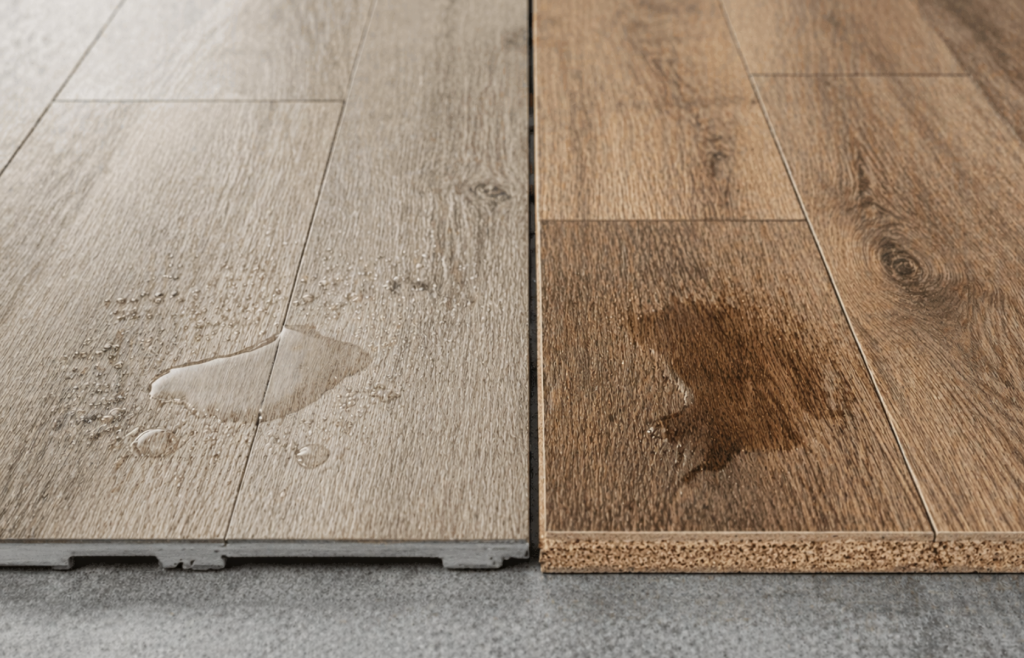
What Is LVP Flooring
Luxury Vinyl Plank (LVP) is a multi-layer synthetic flooring designed to replicate the look of natural wood while offering enhanced durability. Its structure typically includes a rigid or flexible core, a printed design layer, and a protective wear layer on top.
One of the main advantages of LVP is its waterproof construction. The core does not absorb moisture, which allows it to perform well in areas exposed to spills, humidity, or temperature changes. Modern LVP also features realistic textures and finishes, making it visually comparable to hardwood while being more practical for everyday use.
What Is Laminate Flooring
Laminate flooring is composed of a fiberboard core topped with a photographic layer that mimics wood or stone, protected by a clear wear layer. It is known for its affordability and wide variety of designs.
Unlike LVP, laminate is not fully waterproof. Its core is made from compressed wood fibers, which can swell or warp when exposed to moisture over time. While some newer laminate products offer improved water resistance, they still require more careful maintenance in wet environments.
Water Resistance Comparison
The biggest difference between LVP and laminate lies in how they handle water.
LVP is fully waterproof. It can withstand spills, moisture, and even prolonged exposure without structural damage. This makes it ideal for kitchens, bathrooms, basements, and entryways.
Laminate, on the other hand, is moisture-sensitive. While the surface layer can resist small spills for a short time, water that penetrates seams can damage the core. Over time, this may lead to swelling, lifting, or permanent deformation.
For homes where water exposure is common, LVP offers a clear advantage.
Durability and Wear Resistance
Both materials are designed for durability, but they perform differently under stress.
LVP is highly resistant to scratches, dents, and impact. Its flexible structure allows it to absorb pressure without cracking, making it suitable for high-traffic areas, homes with pets, and rental properties.
Laminate has a hard surface that resists scratches well, but it is more prone to chipping or damage under heavy impact. Once damaged, it is more difficult to repair compared to LVP.
In long-term use, LVP tends to maintain its condition better in demanding environments.
Comfort and Feel Underfoot
Comfort is another area where the two materials differ noticeably.
LVP feels softer and slightly warmer underfoot due to its vinyl composition. It also absorbs sound better, reducing noise when walking. This makes it more comfortable for daily use, especially in multi-level homes.
Laminate has a harder, more rigid feel. It can produce a hollow sound when walked on, particularly if the subfloor is not perfectly prepared. While underlayment can improve comfort, it does not fully match the feel of LVP.
Installation Differences
Both LVP and laminate typically use click-lock systems, making installation relatively straightforward. However, there are key differences in requirements.
LVP is more forgiving when it comes to subfloor imperfections. Its flexible structure allows it to adapt slightly to uneven surfaces, simplifying installation in older homes.
Laminate requires a more level subfloor to prevent movement or damage over time. It is also more sensitive to moisture during installation, which may require additional preparation, such as vapor barriers.
As a result, LVP is generally easier and faster to install in a wider range of conditions.
Best Use Cases for Each Option
Choosing between LVP and laminate depends on how and where the flooring will be used.
LVP is the better option for areas exposed to moisture, high traffic, or frequent use. It is especially suitable for kitchens, bathrooms, rental properties, and homes with pets or children.
Laminate can still be a good choice for dry, low-traffic areas where budget is a priority. It works well in bedrooms, living rooms, or spaces where water exposure is minimal.
For most modern homes, LVP offers greater flexibility, durability, and long-term value, while laminate remains a cost-effective alternative for specific use cases.
Read
Why Install Carpet on Stairs: Safety, Grip, and Noise Reduction
Best Carpet Options for Stairs in High-Traffic Homes